Milf Fuvkin Link

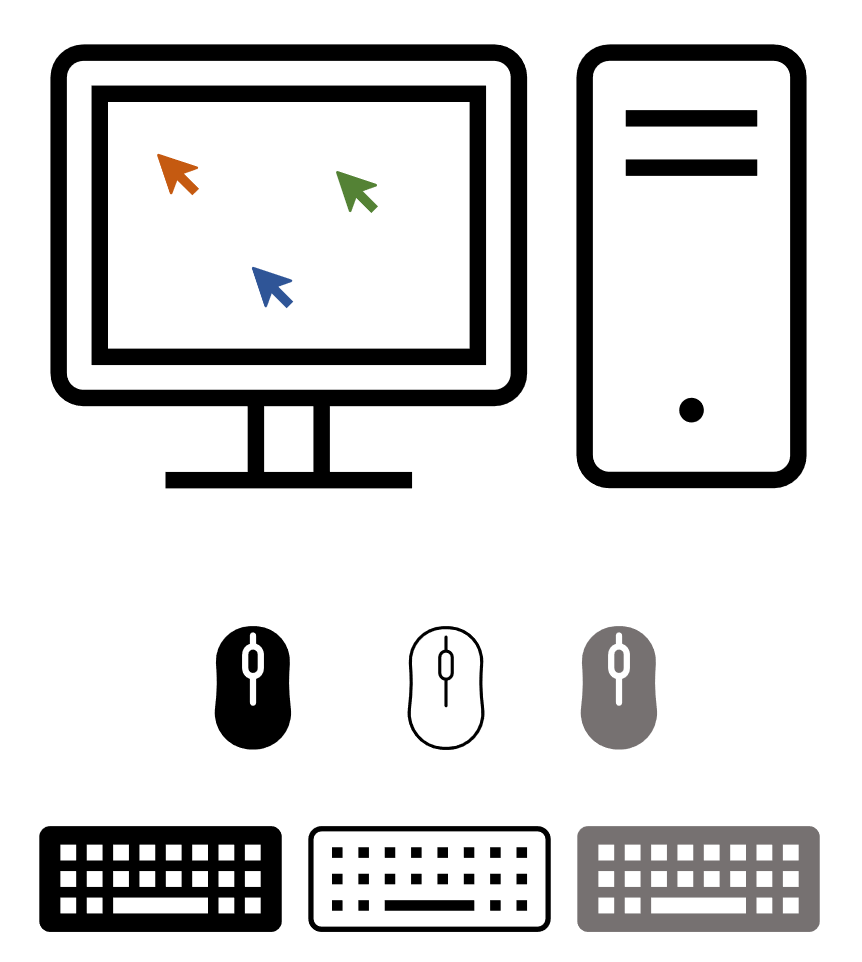
Each user gets their own cursor and can simultaneously work on the same Windows desktop. Configure each individual pointer device (acceleration, cursor theme, wheel and button behaviour etc) independently. Collaboration was never so easy!

Download (Or read some more on what features we have)
December 2025 - New Beta Release
RustDesk + MouseMux = Multi-user Remote Desktop

Major updates to MouseMux! We now support RustDesk for multi-user remote desktop collaboration. This BETA includes new collaborative apps (Multi Paint, Team Vote, Whiteboard), smarter keyboard remapping, performance optimizations with cursor caching and high-DPI mouse support, a new Web SDK, and many bug fixes. As this is a beta release, you may encounter small inconsistencies. Your feedback is highly appreciated!

Simple collaboration

Our goal is to make working together as intuitive and simple as possible. Just add some extra pointer devices (mice, pens, touchpads) and (optional) keyboards and MouseMux will transform your PC into a realtime multi-user system. Each user can work in their own document, annotate on the screen, drag or resize windows or interact with different programs - all at the same time on the same windows desktop. Simple annotations allow each user to highlight parts of the screen. Concurrently interacting with different apps on the same desktop creates new and interesting ways to work together; collaborate by taking over certain actions, type together, draw together - all at the same time without interfering others.

$features.alt

For teams

Use it for pair programming, collaborative designing, in the class or meeting room (so all can interact and have a presence on the screen). Join forces on editing documents, or in the control room so each operator can see where the others are.

For individuals

Use it to customize your mouse (or pen, touch or tablet) interaction; custom acceleration, assigned buttons, themes or wheel behavior - for each individual pointer device. Let any pointer device act as any other (mouse, pen, touch, etc). Record macro's and play them back to automate tasks, even in a multi cursor scenario. Having a cursor for each mouse means you can quickly interact with individual applications because cursors can be localized or dedicated to one program - the restriction of moving one cursor all over the screen and refocusing on a specific application is lifted. The screen's realastate becomes much more manageable.

For industry

In Industrial processes including manufacturing, process control, power generation, fabrication, and refining, and facility processes, including buildings, airports, ships, and space stations where multiple operators work in SCADA like situations safe multiuser operation is vital. MouseMux can manage individual users and can store historical data of any interaction. Assigning a supervisor and overriding actions by other operators is now possible - SCADA programs can integrate with our SDK so true simultaneous interaction becomes possible.

Milf Fuvkin Link

For decades, the cinematic landscape was dominated by the "male gaze," which prioritized youth and conventional beauty. Women of a certain age were often made invisible or cast in roles that defined them solely by their relationship to younger protagonists. Today, we see a surge in "prestige" television and independent film providing a stage for mature actresses—such as , Viola Davis , and Michelle Yeoh —to lead stories that explore themes of professional ambition, sexual autonomy, and personal reinvention. These narratives acknowledge that a woman's life does not "end" at 50; rather, it enters a phase of profound complexity and power. Influence of Streaming and Diverse Voices

Despite this progress, a double standard persists. While "distinguished" older men are frequently paired with much younger love interests and remain action stars into their 70s, women still face intense pressure to maintain a youthful appearance. The "anti-aging" industry and the scrutiny of the tabloid press create a landscape where "aging gracefully" is often code for "aging invisibly." True progress in cinema will be marked not just by more roles for older women, but by a wider acceptance of diverse physicalities and the natural signs of aging on screen. Conclusion milf fuvkin

The narrative around mature women in entertainment is no longer a monolith of decline. It is becoming a vibrant tapestry of experience and resilience. As the industry continues to realize the immense value—both artistic and financial—of these stories, cinema moves closer to reflecting the actual world, where age brings a depth of character that youth simply cannot replicate. For decades, the cinematic landscape was dominated by

The representation of in entertainment and cinema has undergone a significant transformation, evolving from limited, stereotypical roles to more nuanced and central narratives . Traditionally, female actors faced a "biological clock" in Hollywood, where opportunities dwindled once they reached their 40s, often relegated to secondary roles like the "suffering mother" or the "eccentric grandmother." However, recent shifts in industry dynamics, audience demand, and the rise of streaming platforms have begun to dismantle these ageist barriers. The Shift from Archetypes to Complexity These narratives acknowledge that a woman's life does

The explosion of streaming services (Netflix, HBO, Apple TV+) has played a crucial role in this evolution. Unlike traditional box-office models that often chased a younger demographic, streaming platforms thrive on niche, diverse content that resonates with older audiences who have significant purchasing power. Shows like Hacks , The Chair , and Grace and Frankie have proven that stories centered on older women can be both critically acclaimed and commercially successful. Furthermore, the increase in female directors and showrunners—like or Ava DuVernay —has brought a more authentic perspective to the aging process, moving away from caricature toward realism. Challenges and the "Double Standard"

FAQ

For decades, the cinematic landscape was dominated by the "male gaze," which prioritized youth and conventional beauty. Women of a certain age were often made invisible or cast in roles that defined them solely by their relationship to younger protagonists. Today, we see a surge in "prestige" television and independent film providing a stage for mature actresses—such as , Viola Davis , and Michelle Yeoh —to lead stories that explore themes of professional ambition, sexual autonomy, and personal reinvention. These narratives acknowledge that a woman's life does not "end" at 50; rather, it enters a phase of profound complexity and power. Influence of Streaming and Diverse Voices

Despite this progress, a double standard persists. While "distinguished" older men are frequently paired with much younger love interests and remain action stars into their 70s, women still face intense pressure to maintain a youthful appearance. The "anti-aging" industry and the scrutiny of the tabloid press create a landscape where "aging gracefully" is often code for "aging invisibly." True progress in cinema will be marked not just by more roles for older women, but by a wider acceptance of diverse physicalities and the natural signs of aging on screen. Conclusion

The narrative around mature women in entertainment is no longer a monolith of decline. It is becoming a vibrant tapestry of experience and resilience. As the industry continues to realize the immense value—both artistic and financial—of these stories, cinema moves closer to reflecting the actual world, where age brings a depth of character that youth simply cannot replicate.

The representation of in entertainment and cinema has undergone a significant transformation, evolving from limited, stereotypical roles to more nuanced and central narratives . Traditionally, female actors faced a "biological clock" in Hollywood, where opportunities dwindled once they reached their 40s, often relegated to secondary roles like the "suffering mother" or the "eccentric grandmother." However, recent shifts in industry dynamics, audience demand, and the rise of streaming platforms have begun to dismantle these ageist barriers. The Shift from Archetypes to Complexity

The explosion of streaming services (Netflix, HBO, Apple TV+) has played a crucial role in this evolution. Unlike traditional box-office models that often chased a younger demographic, streaming platforms thrive on niche, diverse content that resonates with older audiences who have significant purchasing power. Shows like Hacks , The Chair , and Grace and Frankie have proven that stories centered on older women can be both critically acclaimed and commercially successful. Furthermore, the increase in female directors and showrunners—like or Ava DuVernay —has brought a more authentic perspective to the aging process, moving away from caricature toward realism. Challenges and the "Double Standard"

These companies, among other, use & trust MouseMux

Proudly serving our clients! Let us know if you need a customized/branded version for specific corporate or industrial use.

ABB - Global leader in industrial automation and power technologies
BMW - Premium automotive manufacturer
UFA - University of Alberta
NHS - National Health Service UK
ROAV7 - Regional Operations Air Vehicle 7
RUAG - Swiss aerospace and defense technology company
Micronav - Navigation and positioning technology solutions
Amgen - Biotechnology company
Avio Aero - Aerospace manufacturing company
Bosch - Global engineering and technology company
Schiphol - Amsterdam Airport Schiphol
Vector - Embedded systems and software tools provider

Contact

Address
Moreelsepark 65, 3511 EP Utrecht, the Netherlands

Love MouseMux? Join Us!

We're looking for a passionate MouseMux enthusiast to help spread the word! If you love creating content (videos, tutorials, demos), engaging with communities, or just can't stop talking about multi-cursor collaboration, we want to hear from you.

We love people who think outside the box and can spot new opportunities where MouseMux could flourish - whether that's creative use cases, new markets, or ways to reach people who haven't discovered multi-cursor collaboration yet.