
Software Numroto
Proven standard solution as an alternative to SIGSpro
Proven standard solution as an alternative to SIGSpro
NUMROTO is a complete solution for tool grinding that has been used on machines from different manufacturers for more than 25 years. By popular demand of the user, the 335linear is available with either SIGSpro or NUMROTO.
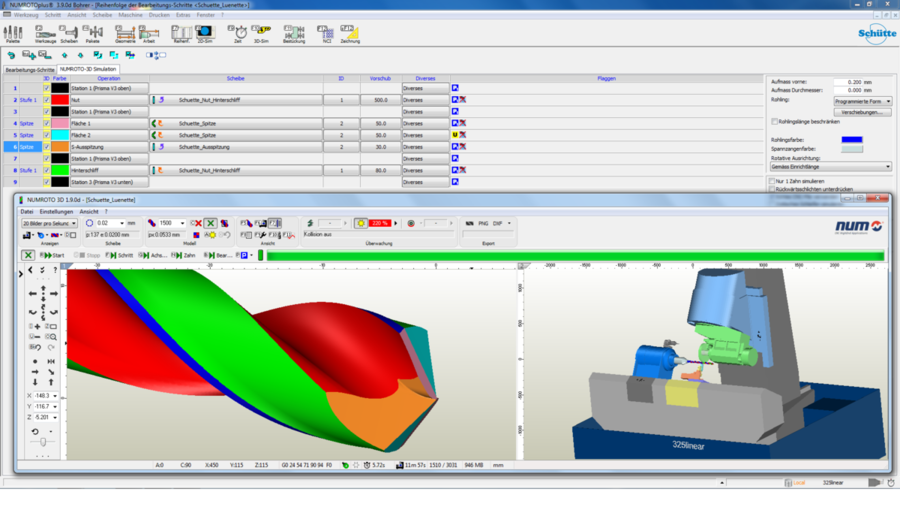
The core of NUMROTO is the NUMROTOplus programming system. With NUMROTOplus, a huge variety of tools can be produced and sharpened. Each detail of the individual tools can be changed and thus adapted to individual needs. NUMROTOplus is constantly being expanded with new workpiece geometries and features, making it a future-oriented investment.
Applying wet paint to dry paper provides the control needed for crisp edges and defined shapes.
The world of watercolor is often described as a "meditative journey," where the fluid nature of the medium requires artists to slow down, stay present, and embrace a certain lack of control [18, 19]. Unlike opaque paints, watercolor is translucent; light reflects from the paper beneath, refracting through the pigment to create a signature glow [1]. The First Brushstroke
Artists choose between pan palettes (pre-filled dry cakes) or tube pigments (liquid paint that can be used to customize personal palettes) [2, 3].
Using 300 GSM watercolor paper is standard to prevent buckling, and many artists tape their paper to a board to keep it flat [14].
A starter set typically includes a large wash brush for broad areas and a smaller round brush for fine details [14, 29]. Mastering the Flow
Applying wet paint to a wet surface allows colors to bleed and disperse, creating soft, ethereal effects.
Learning watercolor is a study of the relationship between water and pigment. Two fundamental techniques define the early journey [33, 20]:

The programmed workpieces can be documented in the form of a workshop-specific drawing using the additional NUMROTO Draw function.
Applying wet paint to dry paper provides the control needed for crisp edges and defined shapes.
The world of watercolor is often described as a "meditative journey," where the fluid nature of the medium requires artists to slow down, stay present, and embrace a certain lack of control [18, 19]. Unlike opaque paints, watercolor is translucent; light reflects from the paper beneath, refracting through the pigment to create a signature glow [1]. The First Brushstroke Introduction to Watercolor
Artists choose between pan palettes (pre-filled dry cakes) or tube pigments (liquid paint that can be used to customize personal palettes) [2, 3]. Applying wet paint to dry paper provides the
Using 300 GSM watercolor paper is standard to prevent buckling, and many artists tape their paper to a board to keep it flat [14]. The First Brushstroke Artists choose between pan palettes
A starter set typically includes a large wash brush for broad areas and a smaller round brush for fine details [14, 29]. Mastering the Flow
Applying wet paint to a wet surface allows colors to bleed and disperse, creating soft, ethereal effects.
Learning watercolor is a study of the relationship between water and pigment. Two fundamental techniques define the early journey [33, 20]:


Copyright © 2026 Solid Insight