State of the Arts has been taking you on location with the most creative people in New Jersey and beyond since 1981. The New York and Mid-Atlantic Emmy Award-winning series features documentary shorts about an extraordinary range of artists and visits New Jersey’s best performance spaces. State of the Arts is on the frontlines of the creative and cultural worlds of New Jersey.
State of the Arts is a cornerstone program of NJ PBS, with episodes co-produced by the New Jersey State Council on the Arts and Stockton University, in cooperation with PCK Media. The series also airs on WNET and ALL ARTS.
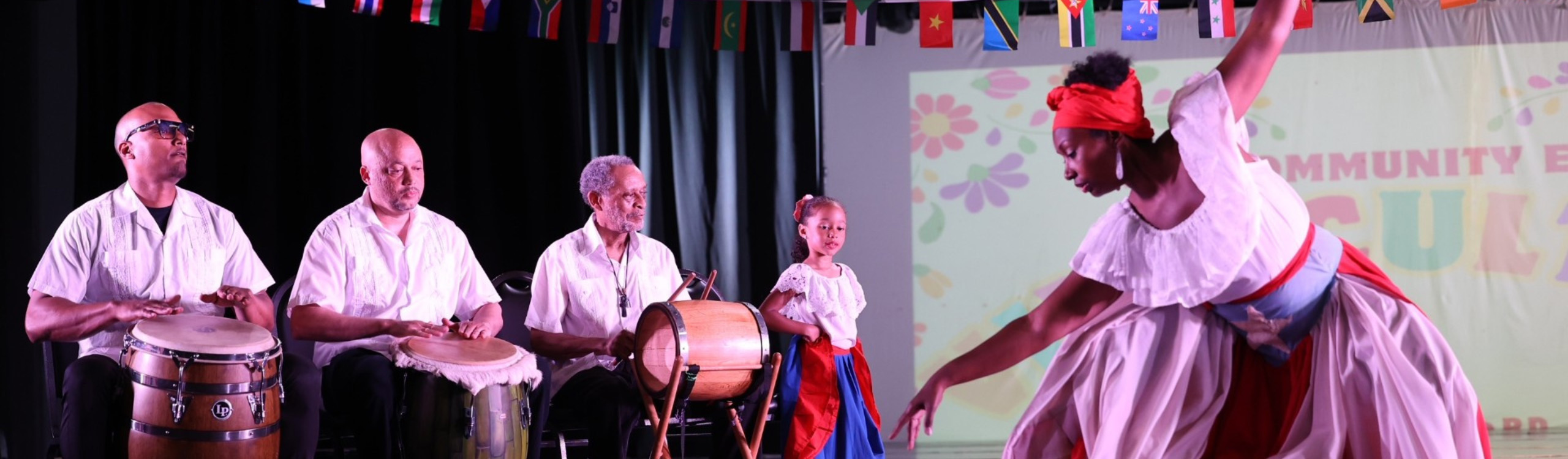
On this week's episode... New Jersey Heritage Fellowships are an honor given to artists who are keeping their cultural traditions alive and thriving. On this special episode of State of the Arts, we meet three winners, each using music and dance from around the world to bring their heritage to New Jersey: Deborah Mitchell, founder of the New Jersey Tap Dance Ensemble; Pepe Santana, an Andean musician and instrument maker; and Rachna Sarang, a master and choreographer of Kathak, a classical Indian dance form.
The New Jersey State Council on the Arts is hosting quarterly Teaching Artist Community of Practice meetings. These virtual sessions serve as a platform for teaching artists to share their experiences, discuss new opportunities, and connect with each other and the State Arts Council.
Register for the next meeting.
The State Arts Council awarded $2 million to 198 New Jersey artists through the Council’s Individual Artist Fellowship program in the categories of Film/Video, Digital/Electronic, Interdisciplinary, Painting, Printmaking/Drawing/Book Arts, and Prose. The Council also welcomed two new Board Members, Vedra Chandler and Robin Gurin.
Read the full press release.
These monthly events, presented by the New Jersey State Council on the Arts and the New Jersey Theatre Alliance, are peer-to-peer learning opportunities covering a wide range of arts accessibility topics.
The appeal of tracks like "Bota Em Você Machuca" lies in their . They are designed for specific social environments: the gym, the dance floor, or the car stereo. The "machuca" (meaning "it hurts" or "it hits hard") refers to the intensity of the bass. It is a celebration of physical sensation over lyrical complexity, proving that in the world of modern pop and funk, the "vibe" is often the most important language of all. Conclusion
At its core, the song is built on the foundation of (or its São Paulo counterparts). This genre originated in the favelas of Brazil, using heavy basslines and repetitive, percussive vocal hooks to create an irresistible urge to move. The phrase "Bota Em Você Machuca" (loosely translating to a provocative rhythmic command) serves as a "chiclete" — a sticky lyric designed to stay in the listener's head long after the track ends. Digital Democratization Download Bota Em Voc Machuca MP3 – MuzicaHot
The reference to highlights the modern era of music consumption. In the past, international hits required major label backing. Today, a song can travel from a neighborhood block party in Rio de Janeiro to a global MP3 indexing site via TikTok trends and YouTube algorithms. The accessibility of the MP3 format allows these subcultures to bypass traditional gatekeepers, reaching audiences who may not understand Portuguese but resonate deeply with the song’s raw energy and club-ready production. Why It Resonates The appeal of tracks like "Bota Em Você